If your guitar sounds slightly out of tune after using a capo, you are not imagining it. One of the most common capo problems is that the strings go sharp after the capo is placed on the neck.
This usually happens because the capo is pressing the strings down with too much force, sitting in the wrong position, or not matching the shape of your fretboard well. When the strings are pushed down too far, they stretch slightly. That extra stretch raises the pitch and makes the guitar sound sharp.
The good news is that this problem is usually easy to reduce or fix.
In this guide, we will explain:
- why capos pull strings sharp
- how capo pressure affects tuning
- why capo placement matters
- which capo types are most likely to cause tuning issues
- why electric guitars can be more sensitive
- how to use a capo without going out of tune
If you are comparing capo styles, you can also see our complete guide to the best guitar capos for acoustic, electric, and beginner guitarists.
Table of Contents
Quick Answer: Why Do Capos Pull Strings Sharp?
A capo usually pulls strings sharp because it applies too much pressure or is placed incorrectly.
Your capo may be causing tuning problems if:
- chords sound sharp immediately after placing the capo
- the guitar was in tune before adding the capo
- some strings sound sharper than others
- tuning improves after repositioning the capo
- the problem is worse on electric guitar
The most common causes are:
- the capo clamps too tightly
- the capo is too far behind the fret
- the capo is crooked or angled
- the capo pulls the strings sideways during placement
- the capo does not match the fretboard radius
- the guitar has high action or setup issues
- the guitar’s intonation needs adjustment
Spring-loaded capos are more likely to cause this problem because their tension is fixed. Adjustable capos usually offer better tuning stability because you can use only as much pressure as needed.
How a Capo Affects Guitar Tuning
A capo works like a movable nut. When you place it on the neck, it shortens the vibrating length of the strings so the guitar plays in a higher key.
However, the capo also presses the strings down toward the frets. If it presses too hard, the strings stretch slightly. That extra stretch increases string tension and raises the pitch.
This is the same basic reason a note can go sharp if you press too hard with your fretting hand.
The effect may be small, but it can become very noticeable:
- when recording
- when playing with other musicians
- when using clean electric guitar tones
- when using light-gauge strings
- when playing higher up the neck
- when the guitar has high action or poor intonation
The Most Common Reason: Too Much Capo Pressure
The biggest reason a capo makes a guitar sound sharp is excessive pressure.
Many spring-loaded capos are designed to clamp firmly enough to work on many different guitars. That makes them fast and convenient, but the fixed pressure can be stronger than necessary for some instruments.
If the capo clamps too tightly:
- the strings are pushed too far toward the fretboard
- the strings stretch more than needed
- the notes become sharp
- chords can sound slightly out of tune
This is especially common with:
- electric guitars
- guitars with light strings
- guitars with low frets
- guitars with sensitive setups
- guitars where the capo is placed too far from the fret
More pressure is not better. The goal is to use the least amount of pressure required to make every string ring cleanly.
Capo Placement Matters More Than Most Players Realize
Even a good capo can make your guitar sound out of tune if it is placed incorrectly.
For best results, place the capo:
- just behind the fret
- straight across the fretboard
- with even pressure across all strings
- without pulling the strings sideways
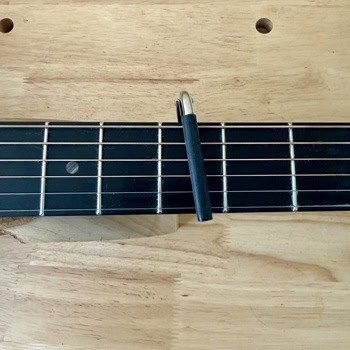
Improper Capo Placement
Avoid placing the capo:
- in the middle of the fret space
- too far behind the fret
- directly on top of the fret
- at an angle
- while dragging or twisting it across the strings
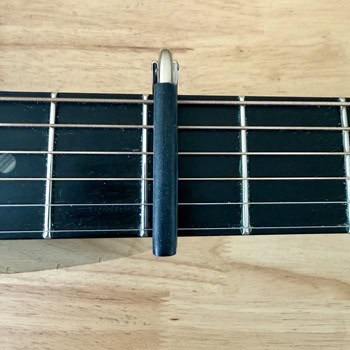
Best Capo Placement
The ideal capo position is just behind the fret, close enough that the strings do not buzz, but not so far back that extra pressure is needed.
For example, if you are placing the capo on the third fret, position it just behind the third fret wire, not halfway between the first and second frets.
This helps because the capo does not need to press as hard to create a clean note.
Quick Troubleshooting Table
| Problem | Likely Cause | Fix |
|---|---|---|
| Guitar goes sharp immediately | Too much capo pressure | Use an adjustable capo or reduce tension |
| Some strings are sharp, others are not | Uneven pressure or wrong fretboard radius | Reposition the capo or try a better-fitting capo |
| Notes buzz with the capo on | Capo too far from the fret or not enough pressure | Move capo closer to the fret |
| Electric guitar sounds sharp with capo | Light strings or sensitive setup | Use lighter capo pressure |
| Every capo causes tuning issues | Guitar setup or intonation problem | Have the guitar checked by a tech |
| Capo pulls strings sideways | Capo placed at an angle or twisted on | Place it straight down without dragging |
Spring Capos vs Adjustable Capos
Capo design makes a big difference in tuning consistency. The two most common types are:
- spring-loaded capos
- adjustable capos
Spring-Loaded Capos
Spring-loaded capos, such as the Kyser Quick-Change, are popular because they are fast and easy to use. You squeeze the handle, place the capo, and release it.
They are great for:
- quick changes
- live performance
- beginners
- one-handed use
The downside is that the spring tension is fixed. You cannot easily reduce the pressure if the capo clamps harder than your guitar needs.
On some guitars, especially electric guitars or guitars with lighter strings, that extra pressure can pull notes sharp.
Adjustable Capos
Adjustable capos, such as the Shubb S1, allow you to control how much pressure is applied to the strings.
This can improve:
- tuning stability
- intonation
- string balance
- comfort
- consistency between guitars
Many players prefer adjustable capos for recording, electric guitar, and situations where staying perfectly in tune matters more than speed.
If you want to compare these two capo styles directly, see our detailed Shubb vs Kyser capo comparison guide.
Why Electric Guitars Often Go Sharp With a Capo
Many players notice capo tuning problems more on electric guitar than acoustic guitar.
Electric guitars often have:
- lighter strings
- lower string tension
- lower action
- more sensitive intonation
- cleaner tones that reveal tuning problems more clearly
A strong spring-loaded capo that works well on an acoustic guitar may apply more pressure than needed on an electric guitar. Because lighter strings are easier to bend or stretch, they can go sharp more easily under too much capo pressure.
For electric guitar, an adjustable capo is often the better choice if tuning intonation is your top priority.
Fretboard Radius Can Also Affect Capo Tuning
Not all guitar necks have the same shape.
Most steel-string acoustic and electric guitars have a curved fretboard. Classical guitars usually have a flatter fretboard. Some electric guitars have a more rounded radius, while others are flatter.
If the capo does not match the fretboard radius well, it may apply uneven pressure.
That can cause:
- some strings to buzz
- some strings to be pressed too hard
- some notes to go sharp
- uneven tuning across the fretboard
This is one reason some premium capos use adaptive tension or radius-matching designs.
If you often notice that only one or two strings go sharp with a capo, fretboard fit may be part of the problem.
Guitar Setup Problems Can Make Capo Issues Worse
Sometimes the capo is not the only problem.
A capo can make existing guitar setup issues more obvious. If your guitar already has intonation or action problems, adding a capo may exaggerate them.
Common setup issues include:
- high action
- poor intonation
- worn or uneven frets
- nut slots that are too high
- old strings
- neck relief problems
High action is especially important. The farther a string has to travel down to reach the fret, the more it stretches. That can make fretted notes, and capoed notes, sound sharp.
If every capo causes major tuning problems on your guitar, the guitar may need a setup.
How to Stop a Capo From Pulling Strings Sharp
1. Place the Capo Just Behind the Fret
Place the capo close to the fret wire, not in the middle of the fret space.
This reduces the amount of pressure needed and helps prevent buzzing.
2. Use Less Pressure
If your capo is adjustable, tighten it only until the strings ring clearly.
Do not clamp harder than necessary. More pressure usually means more tuning problems.
3. Keep the Capo Straight
A crooked capo can pull some strings sharper than others.
Make sure the capo sits parallel to the fret and applies even pressure across the strings.
4. Avoid Pulling the Strings Sideways
When placing the capo, try not to drag it across the strings. Pulling the strings sideways can bend them slightly sharp.
Open the capo, place it directly where you want it, and release it carefully.
5. Retune After Placing the Capo
Even with good technique, some guitars need slight retuning after a capo is added.
This is normal. Many professional players check tuning after placing a capo, especially in the studio.
6. Try an Adjustable Capo
If you regularly have tuning issues, an adjustable capo may help.
Adjustable capos are especially useful for:
- recording
- electric guitar
- light-gauge strings
- lower-tension setups
- players who care about precise intonation
You can compare popular options in our guide to the best guitar capos for acoustic and electric guitar.
Common Signs Your Capo Is Too Tight
Your capo may be using too much pressure if:
- chords sound sharp immediately after placement
- the guitar was in tune before the capo was added
- some strings sound more out of tune than others
- the strings look heavily compressed
- the capo is difficult to squeeze onto the neck
- tuning improves when you move the capo closer to the fret
- tuning improves with an adjustable capo
If you notice these signs, try repositioning the capo first. If that does not help, try a capo with adjustable pressure.
Are Expensive Capos Better for Tuning Stability?
Sometimes, yes.
More expensive capos often provide:
- adjustable pressure
- better materials
- more even string contact
- improved fretboard fit
- smoother operation
- better pressure control
However, an expensive capo is not a complete fix if it is used incorrectly. Even a premium capo can pull strings sharp if it is placed too far from the fret or tightened too much.
Technique still matters.
A well-placed affordable capo can work better than an expensive capo used poorly.
Which Type of Capo Is Best for Staying in Tune?
For most players, an adjustable capo is the best choice for staying in tune because it lets you control pressure more precisely.
Good options often include:
- Shubb-style adjustable capos
- G7th Performance-style capos
- other capos with controlled tension systems
Spring-loaded capos are still excellent for speed and convenience. They are especially useful for live playing when fast changes matter.
The best choice depends on your priority:
| Priority | Best Capo Type |
|---|---|
| Fast changes | Spring-loaded capo |
| Beginner-friendly use | Spring-loaded capo |
| Recording | Adjustable capo |
| Electric guitar | Adjustable capo |
| Best tuning stability | Adjustable capo |
| Live performance convenience | Spring-loaded capo |
If you want specific recommendations, see our full roundup of the best guitar capos.
FAQ: Why Capos Pull Strings Sharp
Why does my guitar go sharp when I use a capo?
Your guitar usually goes sharp with a capo because the capo applies too much pressure or is placed too far behind the fret. The extra pressure stretches the strings slightly, which raises the pitch.
Are spring capos bad for tuning?
Spring capos are not bad, but their fixed tension can sometimes apply more pressure than needed. This can make some guitars go sharp, especially electric guitars with lighter strings.
Why does my electric guitar go sharp with a capo?
Electric guitars often use lighter strings and have more sensitive setups. Because lighter strings are easier to stretch, too much capo pressure can pull them sharp more noticeably.
Does capo placement affect tuning?
Yes. Capo placement has a major effect on tuning. For best results, place the capo just behind the fret and keep it straight across the fretboard.
Should I retune after putting on a capo?
Often, yes. Even a well-placed capo can slightly affect tuning. Many players check and adjust tuning after placing a capo, especially for recording or live performance.
Are adjustable capos better for staying in tune?
Adjustable capos are usually better for intonation accuracy because they let you use only the pressure needed to make the strings ring clearly.
Can a capo damage my guitar?
A normal capo used correctly should not damage your guitar. However, leaving a capo clamped on the neck for long periods is not recommended, and excessive pressure can leave marks on strings or contribute to tuning problems.
Why do only some strings go sharp with a capo?
If only certain strings go sharp, the capo may be applying uneven pressure, sitting at an angle, or not matching your fretboard radius well.
Final Thoughts
A capo usually pulls strings sharp because of too much pressure, poor placement, or a mismatch between the capo and the guitar.
To improve tuning stability:
- place the capo just behind the fret
- keep it straight
- avoid pulling the strings sideways
- use the least pressure needed
- retune after placing the capo
- consider an adjustable capo if tuning problems continue
Spring-loaded capos are fast and convenient, but adjustable capos usually offer better control and more stable tuning.
If you want help choosing the right capo for your guitar, see our complete guide to the best guitar capos for acoustic, electric, and beginner players. We also have a Capo Chart to assist with transposing chords when using a capo.
Best Capos for Tuning Stability
If tuning stability is your top priority, adjustable capos such as the Shubb S1 and G7th Performance 3 are usually better choices than fixed spring-loaded capos.